Tilth & Co. Guide

AI for Small Business Owners: A Plain-Language Guide

What's actually true, what's overblown, and where to start if you decide to.

Handmade goods on a small family farm, the kind of real, local business this guide is written for.
A real Tilth & Co. client: a small, multi-generational family farm, not a tech company.

You didn't get into this business to become a tech expert. You got into it to run a salon, a therapy practice, a farm stand, a shop, something real, with your name on it.

This guide is us doing what we'd want someone to do for us: clearing the ground before you have to walk it alone.

Two things you've probably already thought

If you're the one answering your own phone, doing your own books, and closing up at the end of the night, you've probably had one of these two thoughts about AI already.

That's for big companies. Not for someone like me.

It isn't. The tools that matter for a business your size cost about what lunch costs each month, not a technology budget. You don't need an IT department. You don't need to be good with computers. You need about the same amount of curiosity it took to figure out your point-of-sale system or your booking software, and a little time to try it.

If I bring this into my business, it's going to replace me, or replace my staff.

We understand why that's the first fear. But that is not what this actually does for a business like yours. AI is good at the repetitive, tedious parts: sorting paperwork, drafting a first version of something, answering the same three questions for the tenth time today. It is not good at the parts that make your business yours: the relationship with a regular client, the judgment call on a tricky situation, the handshake.

The owners who are getting real value out of this right now are using it to get some of their time back, then spending that time on the parts of the business only a person can do. Nobody is being replaced. Somebody is just finally getting their afternoon back.

We're not asking you to take our word for either of those. Here's what actually happened when ordinary people, not tech companies, got their hands on this.

What actually happened, not what got promised

A national park found 7,000 days of staff time in one afternoon

Stanford's Jeremy Utley tells this story: a facilities and operations employee at Glen Canyon National Park, not a technical person, sat through one two-hour AI training session. Afterward, on his own time, he spent about forty-five minutes building a tool for the paperwork he dreaded most, the kind of work that used to eat two or three days every time it came around.

Other parks picked up what he built. By the Park Service's own estimate, that one afternoon of tinkering is expected to save roughly 7,000 days of staff time this year (per Jeremy Utley, Stanford, EO interview, 2025, as he tells the story).

No coding. No IT department. Two hours of training and forty-five minutes of curiosity, from someone whose job had nothing to do with technology.

The gap that matters isn't rich versus poor. It's practiced versus new.

Anthropic looked at more than a million real conversations people had with its own AI product. The people who had been using it for six months or more had roughly a 10% higher success rate (per Anthropic's own Economic Index) than people who were newer to it.

Here's the part worth sitting with: that gap was not explained by which country someone lived in, what kind of task they were doing, or which AI they happened to use (per Anthropic's Economic Index). It came down to practice. People who stayed with it long enough to get a feel for it did better than people who tried it once and put it down.

That's genuinely good news for a small business owner. The gap that matters isn't about money or size. It's about getting your hands on it and staying with it a little while. The only way to start closing that gap is to start.

We'll say this plainly every time we cite it: Anthropic is measuring its own product here, and this is a correlation, not a guarantee.


What this actually looks like for a business like yours

Not hypothetical. Not five years off. Here's where this pays off right now for the kind of business we work with.

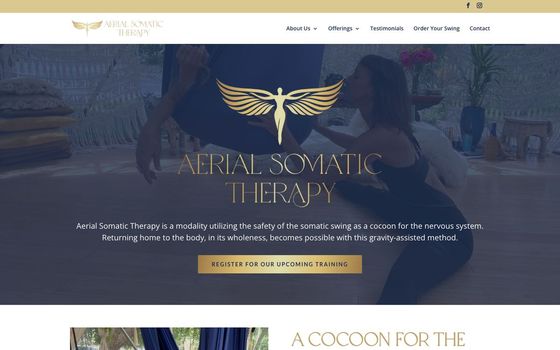
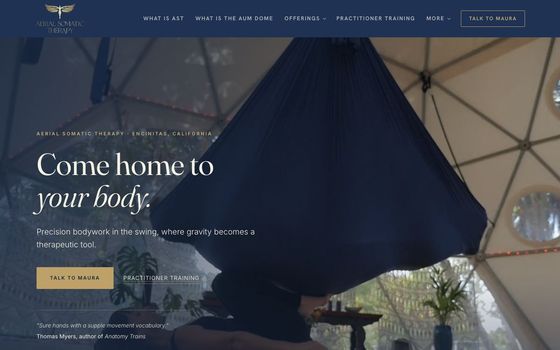
Inside a real client's therapy studio, the kind of business where someone is always mid-session when the phone rings. 1

The calls you're not around to answer

You're with a client. You're mid-cut, mid-session, mid-harvest. The phone rings, and either it goes to voicemail or someone at the front desk has to stop what they're doing to grab it.

An AI phone and text assistant can pick up every call and text, answer the common questions (hours, pricing, availability), and book the appointment right then, at any hour, without pulling anyone off the floor.

This isn't hypothetical for us. We build systems exactly like this for our own clients: a salon that used to lose new clients to an unanswered voicemail, a spa that couldn't get to the phone during a treatment. The system catches what used to slip through, quietly, in the background.

2

Being findable when someone asks an AI instead of a friend

For twenty years, getting found meant showing up on Google. Now a growing number of people just ask an AI assistant ("who's a good [type of business] near me?") and go with whatever name it gives them.

An AI assistant can only recommend a business it can clearly read online. If your website is out of date, your Google Business listing is unclaimed, or you don't have real reviews, you're invisible to that customer, and you never find out you lost them. This is the biggest shift many owners haven't heard about yet, and it's also why the basics (an accurate website, a claimed listing, real reviews) matter more than any AI tool you could add on top. AI built on a broken foundation just makes the mess faster.

A real client's old website, cluttered and hard for search engines or AI assistants to read.
Before
The same client's website after our rebuild, clear and easy for people and AI assistants to read.
After

The same business, before and after we rebuilt her site so people, and AI assistants, could actually find her.

3

A thinking partner for the calls only you can make

If you're the owner, you're probably also the only person in the building who can decide whether to raise your prices, add a service, or change your hours. Most people stop at asking AI to write an email, which is the shallow end.

The bigger use is as a thinking partner: a way to stress-test a price increase before you make it, or argue the other side of a decision you've already half-made, without waiting for a slow afternoon to talk it through with someone. Start with the part of your week you dread most, or the problem that's actually costing you time or customers today, and stay with one tool long enough to get a feel for it.

4

The paperwork that waits until the end of the day

Intake forms, appointment confirmations, follow-up messages, the client note you meant to write right after the session and didn't. This is the exact kind of task the Glen Canyon story above is about: unglamorous, repetitive, and often the first thing AI can take off your plate.

A few things worth knowing before you start

AI sounds exactly as confident when it's wrong as when it's right. Anything with a number, a name, or a price in it gets checked by a human before it goes out.

Don't paste customer details, medical or financial information, or anything private into a free AI tool. Free tools are usually not private, and you don't own what happens to what you type into them.

An AI that answers your phone or writes to your customers is closer to a new hire than to software. It can wander off script. Somebody still has to listen in, at least at first.

What we want to be for you

Here's the honest truth: right now, information about AI is coming at business owners from a dozen directions at once, fast, contradictory, and aimed, more often than not, at companies much bigger than yours. Nobody handed you a map for this, because the ground is still moving.

What we want to be for every business we work with is your steward through it. Your doula. Your guide for whatever's coming down the pipeline next.

That's not a slogan. It's the actual job we think needs doing right now: helping you sort what matters from what's noise, at a pace that fits your business, so you're not figuring this out alone at eleven at night with seventeen browser tabs open.

Where to start

You don't need to hire anyone or commit to anything to find out where you stand. We built something called the TILTH Score: a plain-language look at where your business stands right now, online and otherwise, and what's actually worth fixing first, AI included. It's free, and there's no catch attached to it.

If you'd rather just talk it through with a person first, that's fine too.

No download, no email list, no funnel. Just a real look at where you stand, and someone to walk through it with you.